
Home / Flight disruptions / Extraordinary circumstances
Extraordinary circumstances: what counts and what does not
Airlines often refuse claims by calling a problem “extraordinary”. The law is narrower than they suggest, and the burden of proof is on the airline.
What the law says
Under Article 5(3) of Regulation 261/2004, an airline does not have to pay compensation for a cancellation, and the same principle applies to long delays, if it can prove the disruption was caused by extraordinary circumstances that could not have been avoided even if it had taken all reasonable measures. Both parts must be proven by the airline: that the cause was extraordinary, and that it did everything reasonably possible to avoid the disruption.
Usually a valid exemption
- Airspace closures ordered by a government or military, for example because of conflict.
- Air traffic control strikes or restrictions imposed by the authorities.
- Security threats and political instability affecting the flight.
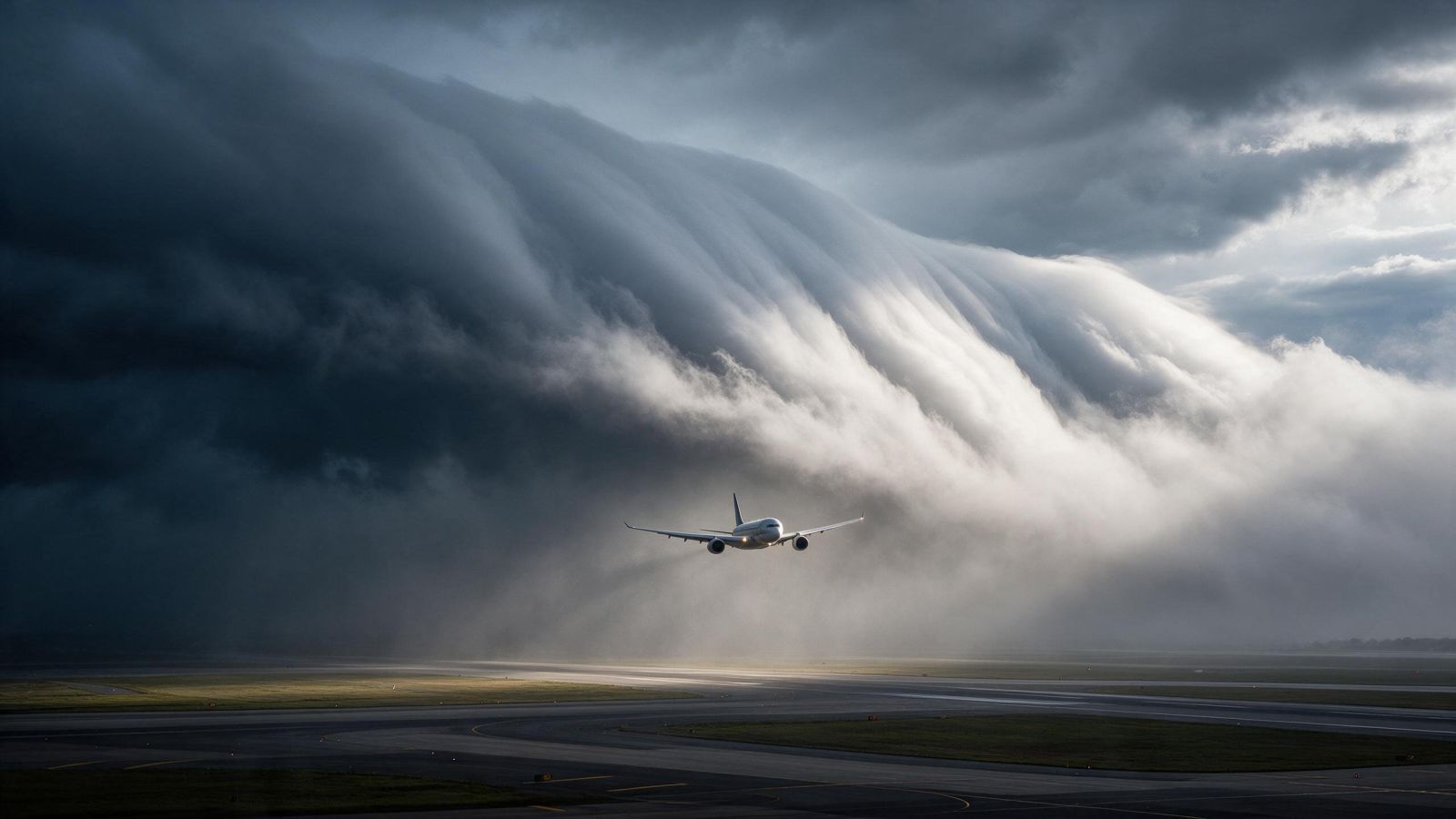
- Severe weather that makes it unsafe to operate, backed by evidence.
- A bird strike, or runway damage caused by an outside object.
- A medical emergency requiring a diversion.
Usually not an exemption
- Staff shortages, missing crew, or crew running out of legal hours because of the airline’s own rostering.
- Staff sickness or an industrial dispute inside the airline.
- Technical faults that arise in normal day-to-day operation, including routine wear and tear.
- A late-arriving aircraft where the earlier delay was itself the airline’s responsibility.
- IT or system failures at the airline.
- Overbooking and other commercial decisions.
When an airline says “weather”
“Weather” is one of the most common reasons given, and sometimes it is true. Ask the airline for the specific weather event, where and when it happened, and why it prevented this particular flight. If other flights on the same route operated normally, that is a useful point to raise. The airline must also show it took reasonable measures, such as arranging backup crew or an alternative aircraft.
Even when the exemption applies, the airline must still offer a refund or re-routing and care such as meals and a hotel. It is only the compensation that falls away.
When you buy FlightPayout documents, they include supporting documents for the situation where an airline answers your claim by blaming extraordinary circumstances.
Related guides
Told it was extraordinary circumstances?
Check your eligibility in less than 60 seconds. The check is free, and you only pay £9.99 if you go ahead.
This page is general information about UK261 and EU261. It is not legal advice. FlightPayout is not a law firm and cannot guarantee that an airline will pay. The amounts and time limits shown are those in force when this page was written; both regulations are under political review, so check the latest position before you rely on them.